
Hi there  Welcome to my Homepage!
About Me
Hi! I’m Zhengxian Wu, a third-year master’s student in the Artificial Intelligence program at Tsinghua Shenzhen International Graduate School (Tsinghua SIGS). I am currently a member of the Future Media Lab. Before joining Tsinghua, I received my bachelor’s degree from Hefei University of Technology.
My research interests lie in recursive self-improvement (RSI) systems and the stability of agents performing long-horizon tasks. I am also exploring hybrid human–AI collaboration scenarios, including cowork-style tasks, as well as broader and more flexible forms of search. In addition, I am currently a Research Intern at Ant Group, where I work on multimodal search.
I am currently open to full-time opportunities and would be delighted to connect with people who share similar research interests. Please feel free to reach out to me at zx-wu24@mails.tsinghua.edu.cn!
News
- 2026.08 🎉🎉 Two papers (CSRS and DBAgent) were accepted to EMNLP 2026.
- 2026.08 🎉🎉 One paper (KBMR) was accepted to ACM MM 2026.
- 2026.07 🚀 We open-sourced SearchOS, a large-scale agent for broad information gathering.
- 2026.07 🎉🎉 One paper (ProMSA) was accepted to ECCV 2026.
- 2026.06 🎉🎉 One paper was accepted to a SIGIR 2026 Workshop.
- 2026.03 🎉🎉 One paper (UniPR) was accepted to CVPR 2026.
- 2026.02 🎉🎉 Two papers (R3G and PSGait) were accepted to ICASSP 2026.
- 2025.11 🎉🎉 One paper (LMGait) was accepted to AAAI 2026.
- 2025.05 🎉🎉 DAGait was selected for an oral presentation at ICME 2025.
- 2025.03 🎉🎉 One paper (DAGait) was accepted to ICME 2025.
Experience
- 05/2026–Present, Research Intern at Ant Group.
- 08/2025–03/2026, Research Intern at OPPO.
Projects
SearchOS is a system-level multi-agent framework for robust open-domain information seeking. It externalizes search progress into shared structured state, coordinates pipeline-parallel agents, and grounds collected evidence with citations.
Project [code]
 [arXiv] 🧠 [机器之心]
Publications
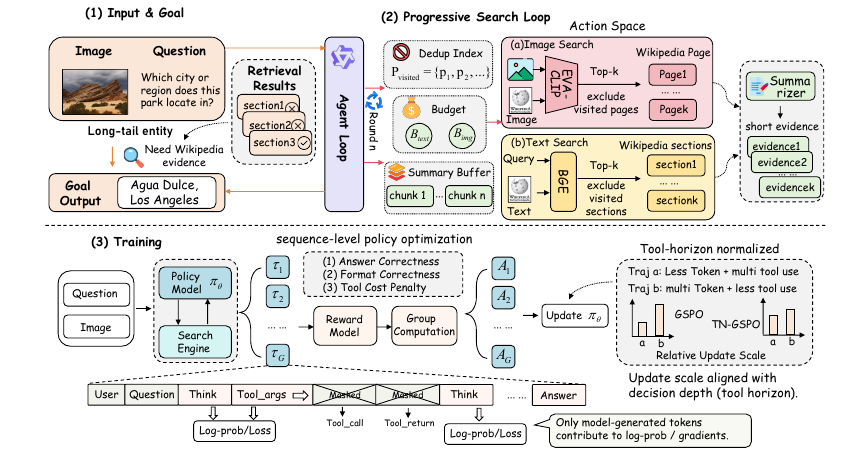
Zhengxian Wu†, Hangrui Xu†, Kai Shi†, Zhuohong Chen, Yunyao Yu, Chuanrui Zhang, Zirui Liao, Jun Yang, Zhenyu Yang, Haonan Lu, Haoqian Wang✉.
ProMSA progressively selects image search, text search, or stopping actions, learning efficient multimodal tool use under explicit interaction budgets.
ECCV 2026 [arXiv] [code]
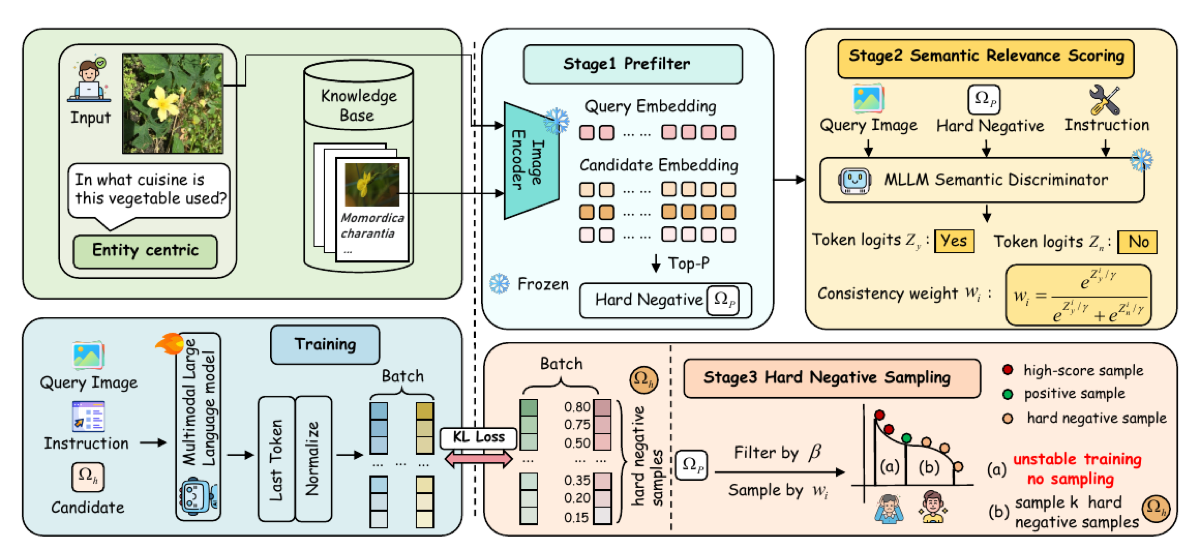
Hangrui Xu†, Zhengxian Wu†, Yunyao Yu†, Zhuohong Chen, Rui Cong, Xiangwen Deng, Zhifang Liu, Peng Jiao, Haoqian Wang✉.
KBMR learns entity-aligned multimodal embeddings and uses continuous semantic distillation to improve Wikipedia-scale retrieval beyond surface-level visual similarity.
ACM MM 2026 [arXiv] [code]
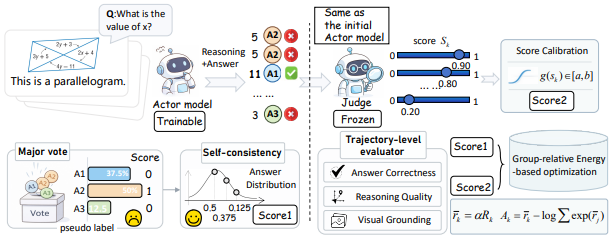
Zhengxian Wu†, Kai Shi†, Chuanrui Zhang, Zirui Liao, Jun Yang, Ni Yang, Qiuying Peng, Luyuan Zhang, Hangrui Xu, Tianhuang Su, Zhenyu Yang, Haonan Lu, Haoqian Wang✉.
We introduce an unsupervised self-evolution framework that combines actor self-consistency with a bounded self-judge signal to improve multimodal reasoning without annotated answers.
arXiv [arXiv] [code]
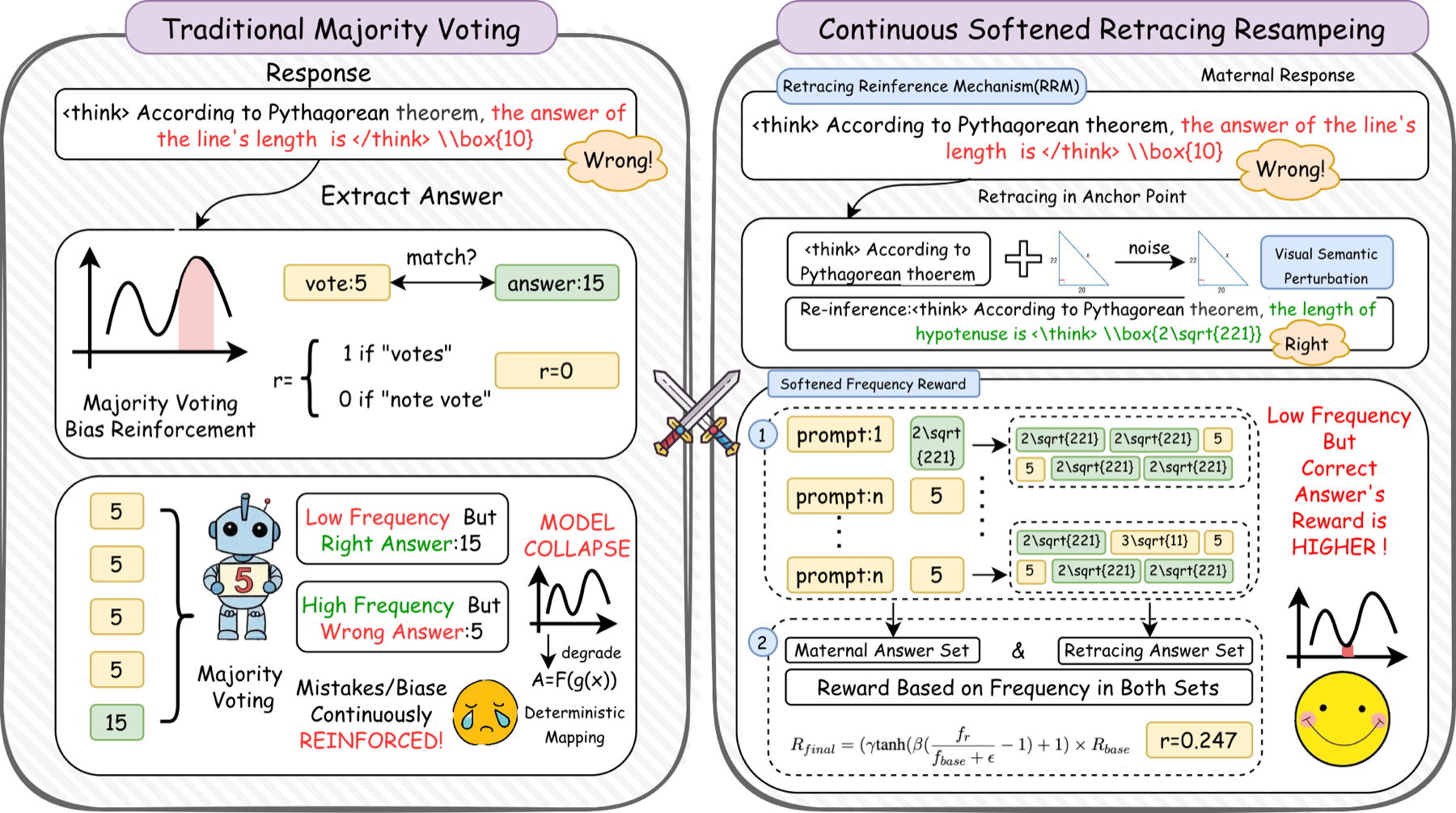
Yunyao Yu†, Zhengxian Wu†, Zhuohong Chen†, Hangrui Xu, Zirui Liao, Xiangwen Deng, Zhifang Liu, Senyuan Shi, Haoqian Wang✉.
CSRS stabilizes unsupervised multimodal self-evolution through retracing-based exploration, softened frequency rewards, and visual semantic perturbation.
EMNLP 2026 [arXiv] [code]
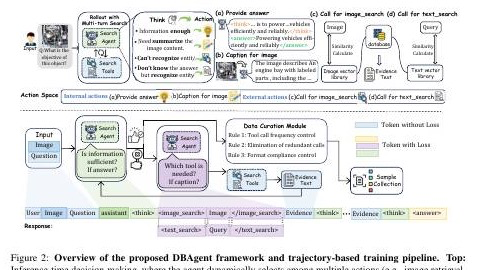
Zhuohong Chen†, Zhengxian Wu†, Yunyao Yu†, Hangrui Xu, Zirui Liao, Zhifang Liu, Xiangwen Deng, Peng Jiao, Haoqian Wang✉.
DBAgent turns knowledge-based visual question answering into a multi-step decision process that adaptively chooses when and how to retrieve evidence.
EMNLP 2026 [arXiv] [code coming soon]
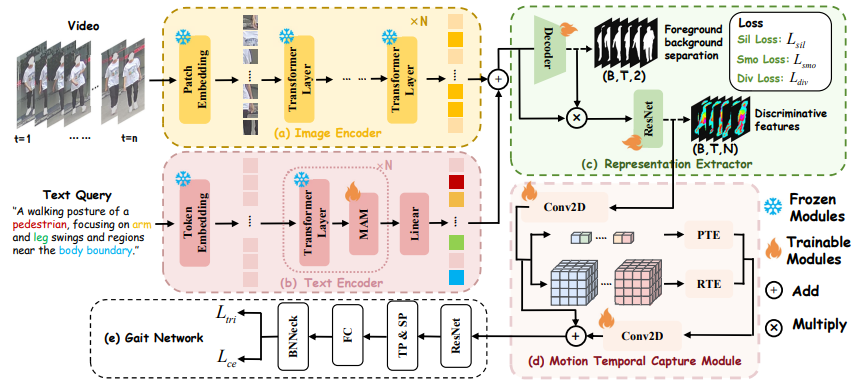
Zhengxian Wu†, Chuanrui Zhang†, Shenao Jiang†, Hangrui Xu, Zirui Liao, Luyuan Zhang, Huaqiu Li, Peng Jiao, Haoqian Wang✉.
LMGait uses language-derived motion cues together with motion-aware alignment and temporal modeling to learn more generalizable gait representations.
AAAI 2026 [arXiv] [code]
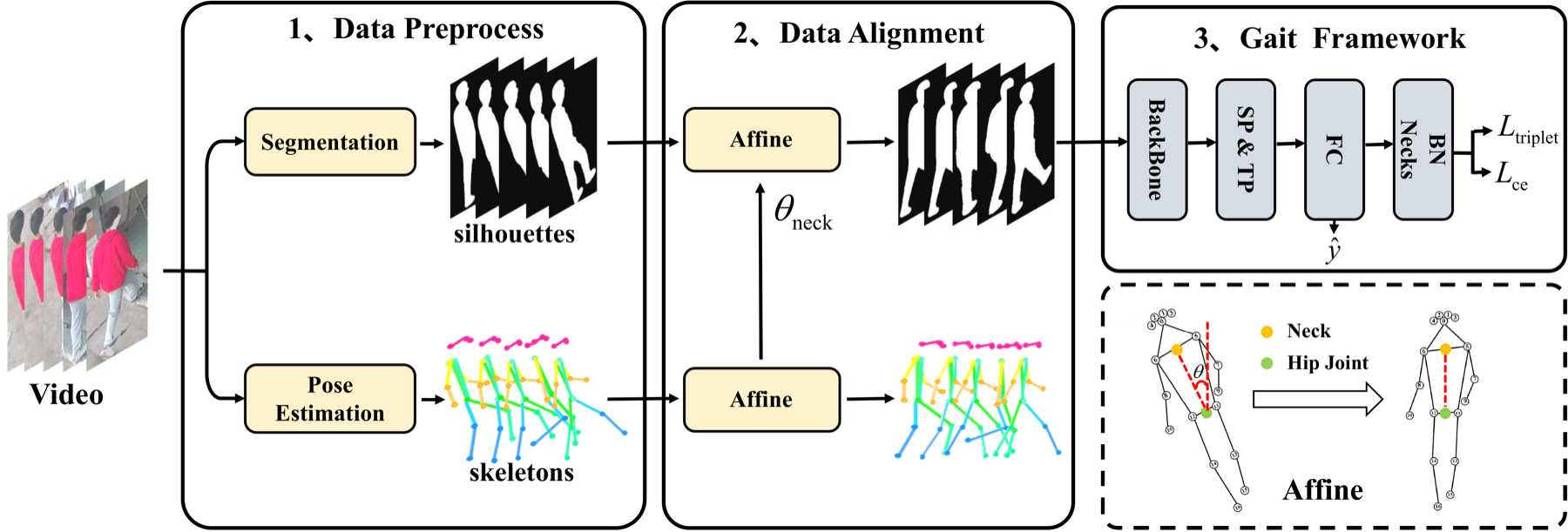
Zhengxian Wu†, Chuanrui Zhang†, Hangrui Xu, Peng Jiao, Haoqian Wang✉.
DAGait uses skeleton-guided affine alignment to reduce spatial and temporal distribution inconsistencies in unconstrained gait sequences.
ICME 2025 · Oral [arXiv] [code]
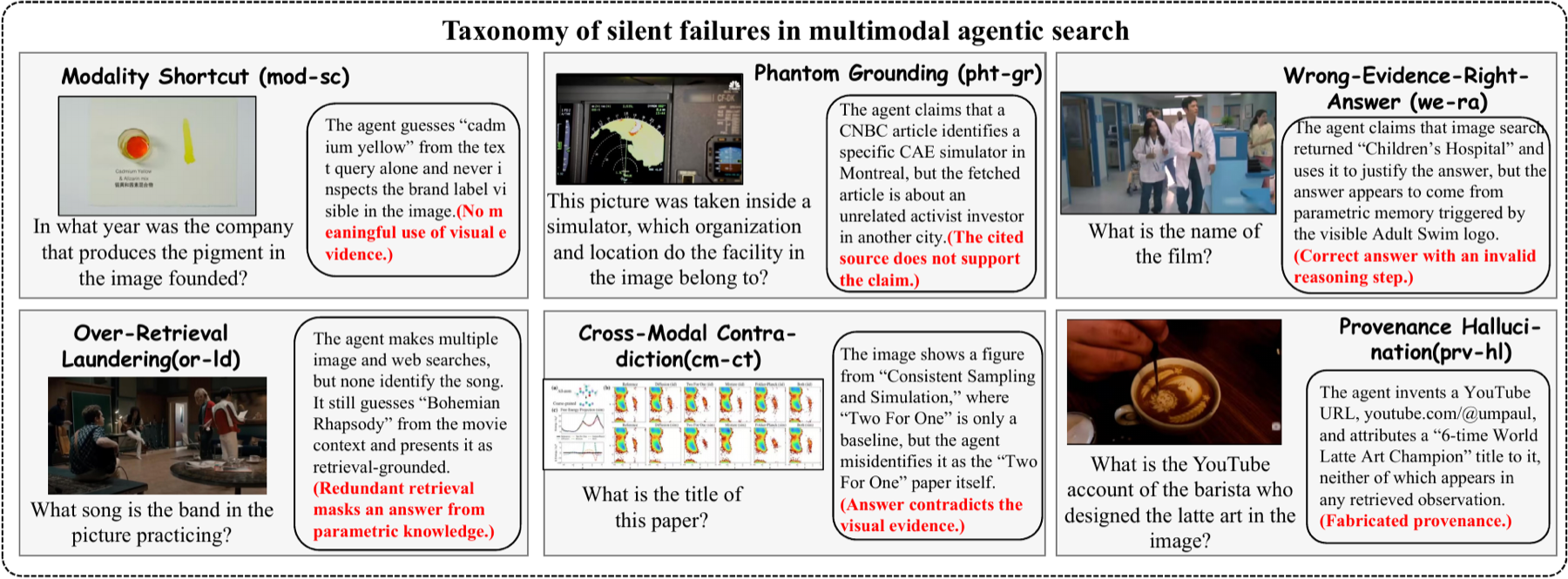
Zhengxian Wu, Junjie Gao, Kai Yang✉.
We introduce a six-category taxonomy and trajectory-level evaluation pipeline for detecting groundedness and faithfulness failures hidden by final-answer accuracy.
SIGIR 2026 SynthIR Workshop [arXiv] [code]
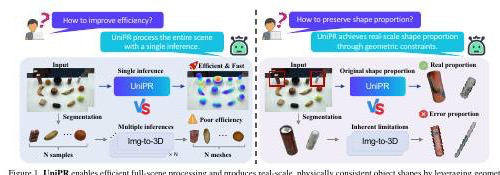
Chuanrui Zhang†, Yingshuang Zou†, Zhengxian Wu†, Yonggen Ling, Yuxiao Yang, Ziwei Wang✉.
UniPR jointly reconstructs every object in a scene from one stereo pair while preserving real-world scale through geometric constraints.
CVPR 2026 [arXiv] [code]
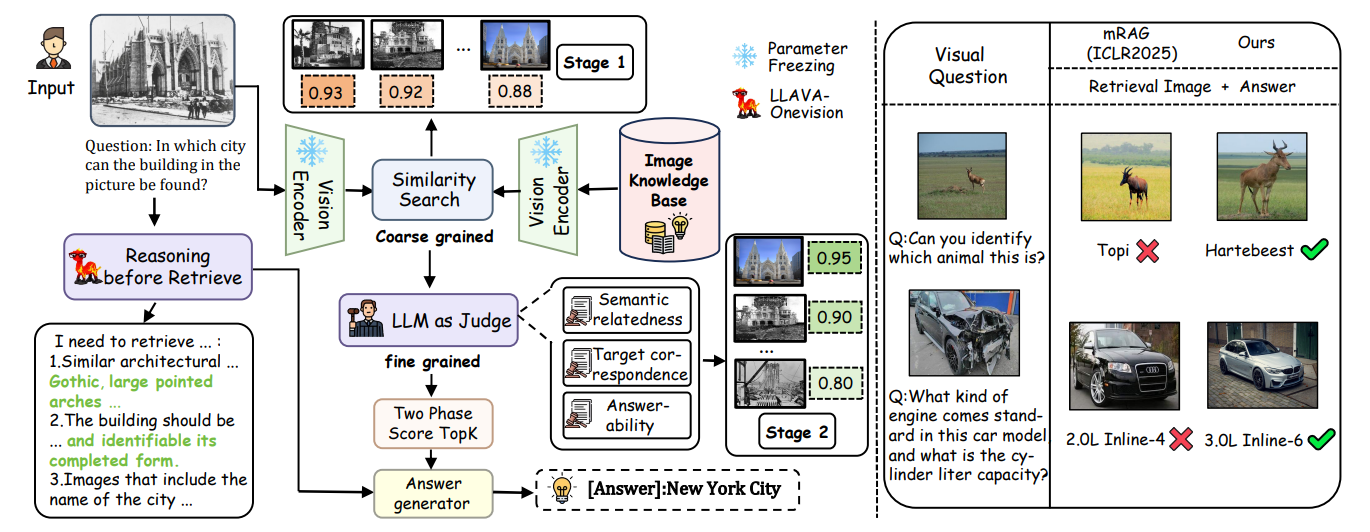
Zhuohong Chen†, Zhengxian Wu†, Zirui Liao, Shenao Jiang, Hangrui Xu, Yang Chen, Chaokui Su, Xiaoyu Liu, Haoqian Wang✉.
R3G plans the visual evidence it needs, retrieves candidate images, and reranks them for sufficiency before producing an answer.
ICASSP 2026 [arXiv] [code]
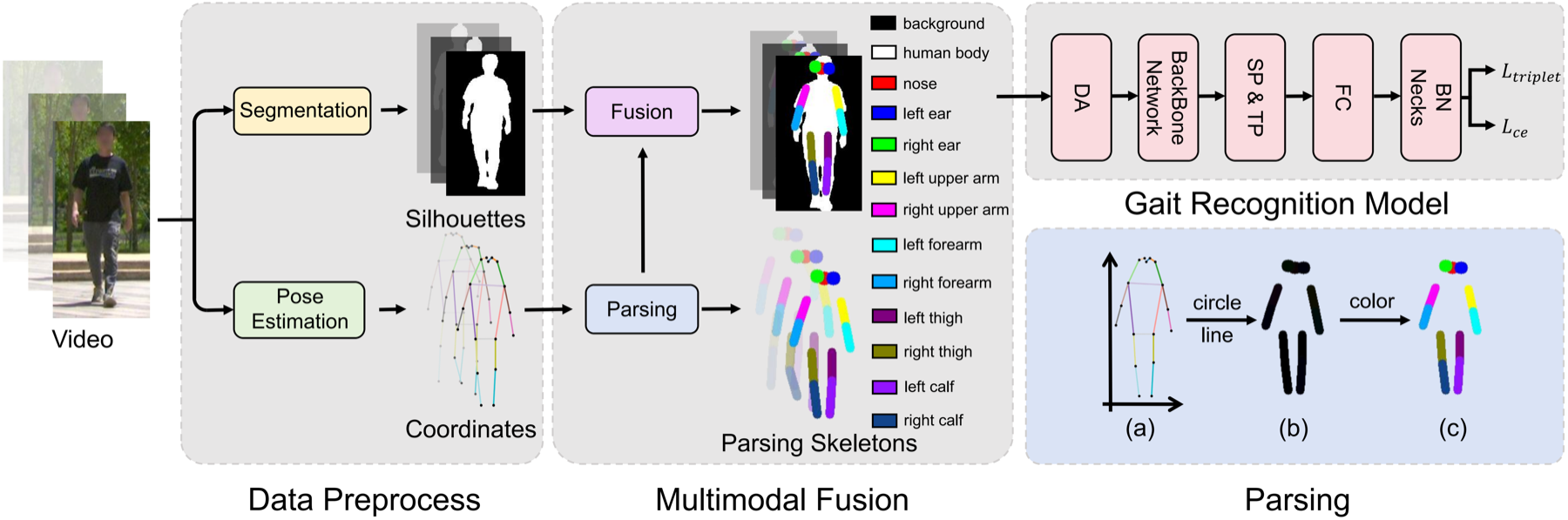
Hangrui Xu†, Zhengxian Wu†, Chuanrui Zhang, Zhuohong Chen, Zhifang Liu, Peng Jiao, Haoqian Wang✉.
PSGait combines silhouettes with a parsing-skeleton representation that captures fine-grained human-part shapes and dynamics for robust in-the-wild recognition.
ICASSP 2026 [arXiv] [code]